

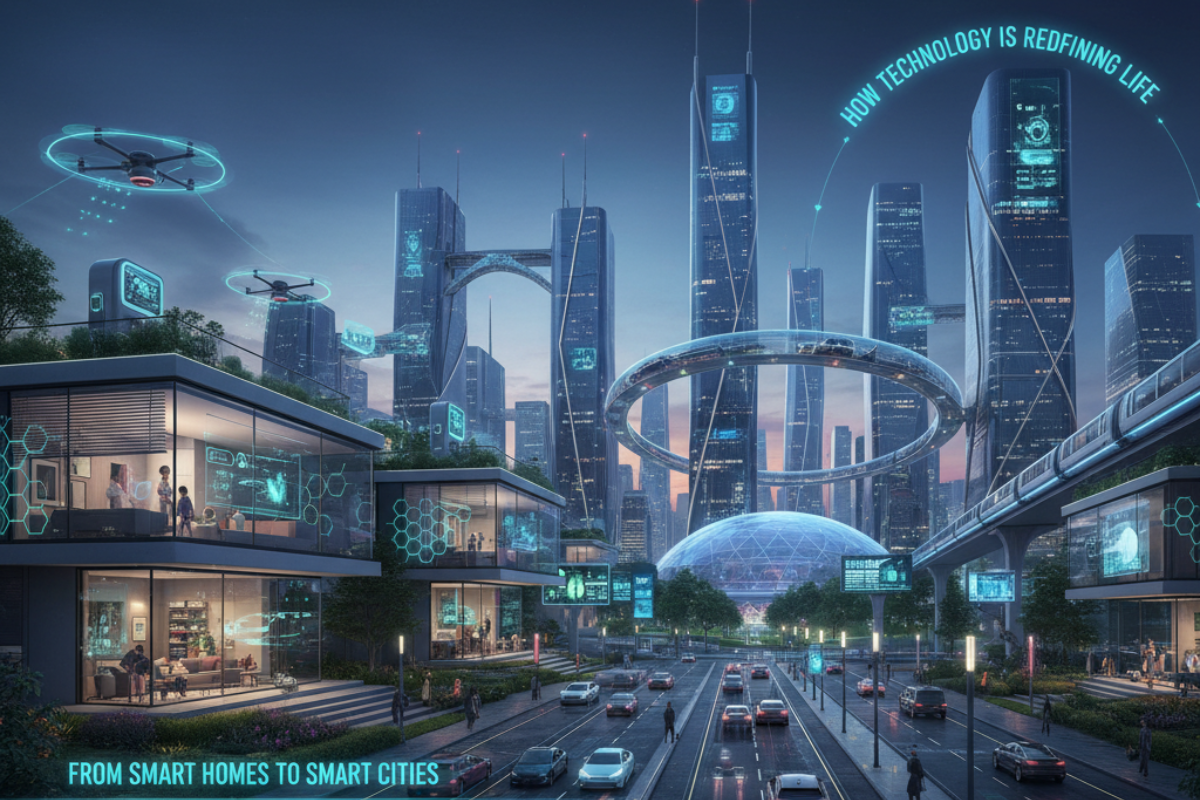
Technology has always been a driving force behind human progress. Over the last few decades, it has drastically transformed the way we live, work, and interact. From the invention of the internet to artificial intelligence, technological advancements have made life more efficient, connected, and intelligent. Today, this transformation is not limited to individual devices or systems—it is expanding into our homes, neighborhoods, and entire cities.
The concept of smart technology has moved beyond gadgets and devices. It now encompasses entire ecosystems designed to make life easier, safer, and more sustainable. Smart homes, smart transportation, smart healthcare, and smart cities are just a few examples of how technology is reshaping our world.
In this article, we will explore the evolution of smart technology, the impact of smart homes, and the ambitious concept of smart cities. We will also discuss the challenges, benefits, and future prospects of living in a connected, intelligent world.
The Rise of Smart Technology
Smart technology refers to systems, devices, or applications that use advanced computing, sensors, and connectivity to automate processes and improve efficiency. These systems often leverage artificial intelligence (AI), the Internet of Things (IoT), cloud computing, and big data analytics to make intelligent decisions without human intervention.
The evolution of smart technology can be divided into several key stages:
-
Automation Era: Machines and devices were created to perform repetitive tasks efficiently. Examples include industrial robots and automated assembly lines.
-
Connected Devices: With the rise of the internet, devices could communicate with each other, forming the foundation of IoT.
-
Intelligent Systems: AI and machine learning enabled systems to analyze data, learn from patterns, and make decisions.
-
Smart Environments: Today, technology integrates seamlessly into homes, cities, and infrastructure, creating intelligent environments that respond dynamically to human needs.
The proliferation of smartphones, wearable devices, and voice assistants has made people more aware of the benefits of smart technology. People no longer see it as a luxury—it is becoming a necessity for convenience, efficiency, and sustainability.
From Smart Homes to Smart Cities: Key Components
The journey from smart homes to smart cities involves several components working together. The transition can be understood through a simple information table:
| Category | Description | Examples |
|---|---|---|
| Smart Homes | Homes equipped with devices that automate and control tasks. | Smart lighting, smart thermostats, smart locks, voice assistants |
| Smart Appliances | Household appliances that can be controlled remotely and optimize usage. | Smart refrigerators, robotic vacuum cleaners, connected washing machines |
| Smart Security | Systems designed to ensure safety and security at home. | CCTV cameras, motion sensors, smart doorbells |
| Smart Healthcare | Technology that monitors health and provides real-time data. | Wearable fitness trackers, telemedicine devices, smart beds |
| Smart Transportation | Transportation systems that optimize routes, reduce congestion, and save fuel. | Electric vehicles, smart traffic signals, ride-sharing apps |
| Smart Energy | Efficient use of energy resources using technology. | Solar panels, energy management systems, smart meters |
| Smart Cities | Urban areas integrating multiple smart systems for better living conditions. | Smart grids, intelligent waste management, smart public services |
| Smart Governance | Technology that facilitates transparent and efficient governance. | E-governance platforms, digital public services, citizen engagement apps |
This table highlights how smart homes are just the beginning. The same principles—automation, connectivity, and data-driven decision-making—scale up to entire cities, creating smart cities that are efficient, sustainable, and citizen-focused.
The Transformation of Homes
Smart homes are no longer a futuristic concept—they are part of our daily lives. Modern homes integrate technology to simplify tasks, enhance comfort, and improve safety. Key features of smart homes include:
-
Automated Lighting and Climate Control: Lights, fans, and air conditioning can adjust automatically based on occupancy or weather conditions.
-
Voice-Activated Assistants: Devices like Amazon Alexa, Google Home, or Apple Siri allow users to control home systems with voice commands.
-
Energy Efficiency: Smart meters and appliances optimize energy consumption, reducing electricity bills and environmental impact.
-
Enhanced Security: Surveillance cameras, smart locks, and motion sensors allow homeowners to monitor and secure their property remotely.
-
Connected Entertainment: Smart TVs, audio systems, and streaming devices provide personalized entertainment experiences.
The rise of smart homes also encourages a culture of remote management and convenience. People can control multiple aspects of their homes from their smartphones, no matter where they are.
Moving Towards Smart Cities
While smart homes focus on individual households, smart cities aim to improve the quality of life at the community and city level. By integrating technology into infrastructure, transportation, governance, and public services, cities become more sustainable, efficient, and responsive.
Key Features of Smart Cities:
-
Intelligent Transportation Systems (ITS): Smart traffic lights, GPS-based public transport tracking, and predictive traffic management reduce congestion and improve mobility.
-
Smart Energy Grids: Cities can manage energy distribution more efficiently, integrate renewable energy, and reduce power outages.
-
Waste Management: IoT-enabled sensors monitor trash levels in bins, optimize collection schedules, and reduce littering.
-
Public Safety and Security: Smart surveillance cameras and AI-based crime prediction systems enhance safety in urban areas.
-
Digital Governance: Citizens can access government services online, track public projects, and participate in decision-making processes.
-
Environmental Monitoring: Sensors monitor air quality, water quality, and noise pollution, enabling cities to maintain sustainable conditions.
Cities like Singapore, Barcelona, and Dubai are leading examples of smart city initiatives. These cities leverage technology not just to enhance convenience but also to achieve long-term sustainability and resilience.
Benefits of Smart Technology
The adoption of smart homes and smart cities brings numerous advantages for individuals, communities, and governments:
-
Convenience and Comfort: Automated systems simplify daily tasks and improve overall living conditions.
-
Energy Efficiency: Smart energy management reduces waste and lowers costs.
-
Enhanced Safety: Smart security systems prevent theft, monitor emergencies, and protect citizens.
-
Environmental Sustainability: Optimized resource use and environmental monitoring reduce the ecological footprint.
-
Economic Growth: Smart infrastructure attracts businesses, boosts innovation, and creates jobs.
-
Data-Driven Decisions: Governments and city planners can use real-time data to improve services and policies.
Challenges and Concerns
Despite its numerous benefits, smart technology comes with challenges:
-
Privacy Issues: Data collected by smart devices can be vulnerable to misuse or cyberattacks.
-
High Costs: Initial setup costs for smart homes and smart city infrastructure can be significant.
-
Technical Complexity: Managing interconnected systems requires skilled personnel and robust technology.
-
Digital Divide: Not all citizens may have equal access to smart technologies, potentially increasing inequality.
-
Dependence on Technology: Over-reliance on smart systems could create vulnerabilities during system failures.
Addressing these challenges requires a combination of policy-making, cybersecurity measures, public awareness, and continuous innovation.
The Future of Smart Living
The future promises even more advanced integration of technology into daily life. Some emerging trends include:
-
AI-Driven Personalization: Homes and cities will adapt dynamically to individual preferences and behaviors.
-
Autonomous Vehicles: Self-driving cars and smart public transport systems will revolutionize mobility.
-
Green Smart Cities: Focus on renewable energy, carbon-neutral buildings, and sustainable urban planning.
-
Smart Healthcare: Telemedicine and wearable health devices will allow for proactive and personalized medical care.
-
IoT Expansion: More devices will be interconnected, creating seamless environments that respond intelligently to human needs.
As technology evolves, the line between smart homes and smart cities will blur. We will move towards holistic smart ecosystems where every aspect of life is interconnected, sustainable, and intelligent.
Conclusion
The journey from smart homes to smart cities illustrates how technology is redefining life at every level. From automating household chores to optimizing entire urban environments, smart technology promises convenience, efficiency, safety, and sustainability.
However, this transformation comes with responsibilities—addressing privacy, cybersecurity, and equitable access are crucial to ensuring that technology benefits everyone. By embracing innovation while mitigating risks, society can create a future where smart living is not just a luxury but a standard for a better quality of life.
