

Introduction
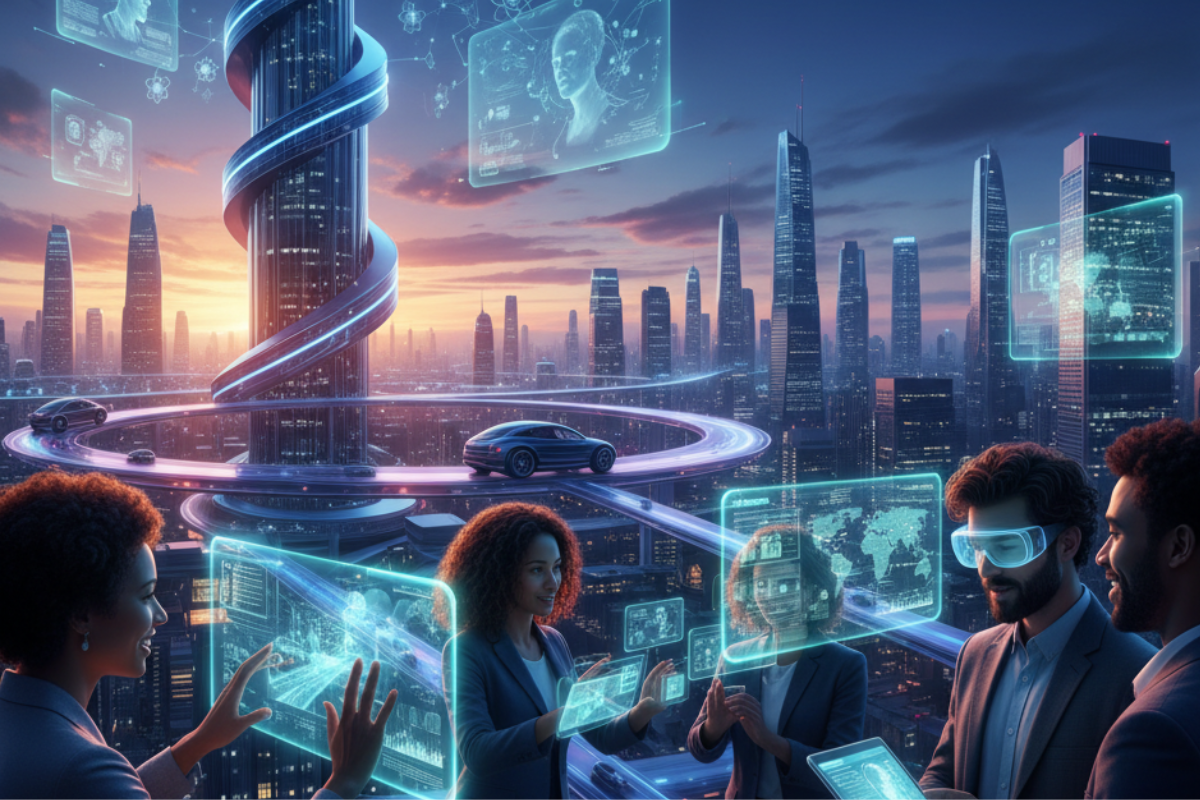
The digital revolution is not a single event—it is an ongoing process of transformation that has changed the way we live, work, and connect. From the early days of the internet to the rise of smartphones, each wave of innovation has reshaped economies and societies. Now, as we stand at the edge of the next digital revolution, we are entering an era defined by artificial intelligence, blockchain, quantum computing, biotechnology, extended reality, and more.
This revolution will not just bring new devices or apps; it will redefine industries, change how we interact with information, and even alter human identity. In this blog, we will explore how emerging technologies are shaping the future of our world, what opportunities they bring, and the challenges we must prepare for.
Overview of Emerging Technologies
To make sense of the innovations driving this transformation, let’s look at the core technologies that form the foundation of the next digital revolution.
| Technology | What It Is | Impact on the World | Examples in Action |
|---|---|---|---|
| Artificial Intelligence (AI) | Machines that can simulate human thinking, learning, and decision-making. | Enhances automation, personalization, and decision-making. | ChatGPT, autonomous vehicles, AI medical diagnosis. |
| Blockchain | A decentralized ledger system for secure, transparent data storage and transactions. | Improves trust, removes intermediaries, and enables digital ownership. | Cryptocurrencies, smart contracts, supply chain tracking. |
| Quantum Computing | Advanced computing that uses quantum bits (qubits) instead of binary data. | Solves complex problems far faster than classical computers. | Drug discovery, cryptography, financial modeling. |
| Extended Reality (XR) | Includes Virtual Reality (VR), Augmented Reality (AR), and Mixed Reality (MR). | Transforms entertainment, education, and collaboration. | VR classrooms, AR shopping, metaverse experiences. |
| Biotechnology | Technology that manipulates living organisms for health, agriculture, and industry. | Revolutionizes healthcare, food production, and sustainability. | Gene editing (CRISPR), lab-grown meat, personalized medicine. |
| Internet of Things (IoT) | Network of connected devices that collect and share data. | Creates smarter cities, homes, and industries. | Smart homes, connected vehicles, industrial automation. |
| 5G & Beyond | Next-gen wireless networks offering high speed and low latency. | Enables seamless connectivity and supports advanced tech ecosystems. | Autonomous cars, telemedicine, remote surgeries. |
| Renewable Energy Tech | Innovations in clean and sustainable energy sources. | Reduces carbon emissions and builds energy resilience. | Solar, wind, hydrogen power, smart grids. |
The Rise of Artificial Intelligence (AI)
Artificial intelligence is the beating heart of the next digital revolution. Unlike traditional tools, AI has the ability to learn, adapt, and improve over time. It is already being integrated into daily life—from voice assistants and recommendation engines to predictive healthcare and autonomous vehicles.
-
Business Impact: AI streamlines supply chains, automates customer service, and predicts consumer behavior.
-
Healthcare Impact: AI-powered diagnostic tools detect diseases earlier and personalize treatment.
-
Education Impact: Adaptive learning platforms create customized experiences for students.
However, AI also raises ethical questions. Who is responsible if an AI system makes a mistake? Will automation replace millions of jobs? These debates are crucial as AI adoption accelerates.
Blockchain and Decentralized Systems
Blockchain technology is often associated only with cryptocurrencies like Bitcoin, but its scope is much larger. At its core, blockchain allows for decentralized, tamper-proof records.
-
Finance: Enables fast, transparent transactions without banks.
-
Supply Chain: Tracks products from source to consumer, ensuring authenticity.
-
Digital Ownership: NFTs (non-fungible tokens) redefine art, music, and content ownership.
The challenge is scalability and regulation. Governments worldwide are still figuring out how to integrate blockchain into the legal and economic framework.
Quantum Computing: A Leap Beyond Limits
Quantum computing is not just faster than classical computing—it’s a whole new way of processing information. By using qubits, quantum computers can perform calculations that are impossible for regular systems.
-
Pharmaceuticals: Can simulate molecules for drug discovery in record time.
-
Finance: Improves risk analysis and investment strategies.
-
Climate Modeling: Helps predict and combat climate change with better simulations.
The technology is still in early development, but as it matures, it could unlock breakthroughs that were previously unimaginable.
Extended Reality (XR) and the Metaverse
Extended Reality, which combines VR, AR, and MR, is blurring the lines between physical and digital worlds.
-
Workplaces: Virtual offices and remote collaboration.
-
Education: Immersive learning environments.
-
Entertainment: Gaming and storytelling beyond traditional screens.
Companies like Meta, Apple, and Microsoft are heavily investing in XR, signaling that the metaverse may become the next version of the internet.
Biotechnology and Human Enhancement
The future of biotechnology is about enhancing human life. With gene editing tools like CRISPR, diseases that were once incurable may be eliminated.
-
Healthcare: Personalized medicine based on individual DNA.
-
Agriculture: Crops that resist pests and climate change.
-
Longevity: Potential breakthroughs in anti-aging research.
But these advancements raise ethical dilemmas about genetic privacy, inequality, and “designer babies.”
Internet of Things (IoT) and Smart Environments
IoT creates ecosystems where devices communicate seamlessly.
-
Smart Homes: Automated lighting, heating, and security.
-
Smart Cities: Efficient waste management, traffic control, and energy distribution.
-
Industries: Predictive maintenance in factories and logistics.
While convenient, IoT also creates cybersecurity challenges since every connected device can be a potential entry point for hackers.
5G, 6G, and the Future of Connectivity
The rollout of 5G networks has already begun transforming industries by providing ultra-fast connectivity. Looking ahead, 6G networks may push this further with speeds hundreds of times faster than 5G.
This level of connectivity will support:
-
Fully autonomous vehicles.
-
Real-time remote surgeries.
-
Seamless virtual reality streaming.
The challenge lies in building infrastructure and ensuring equitable access worldwide.
Renewable Energy and the Digital Ecosystem
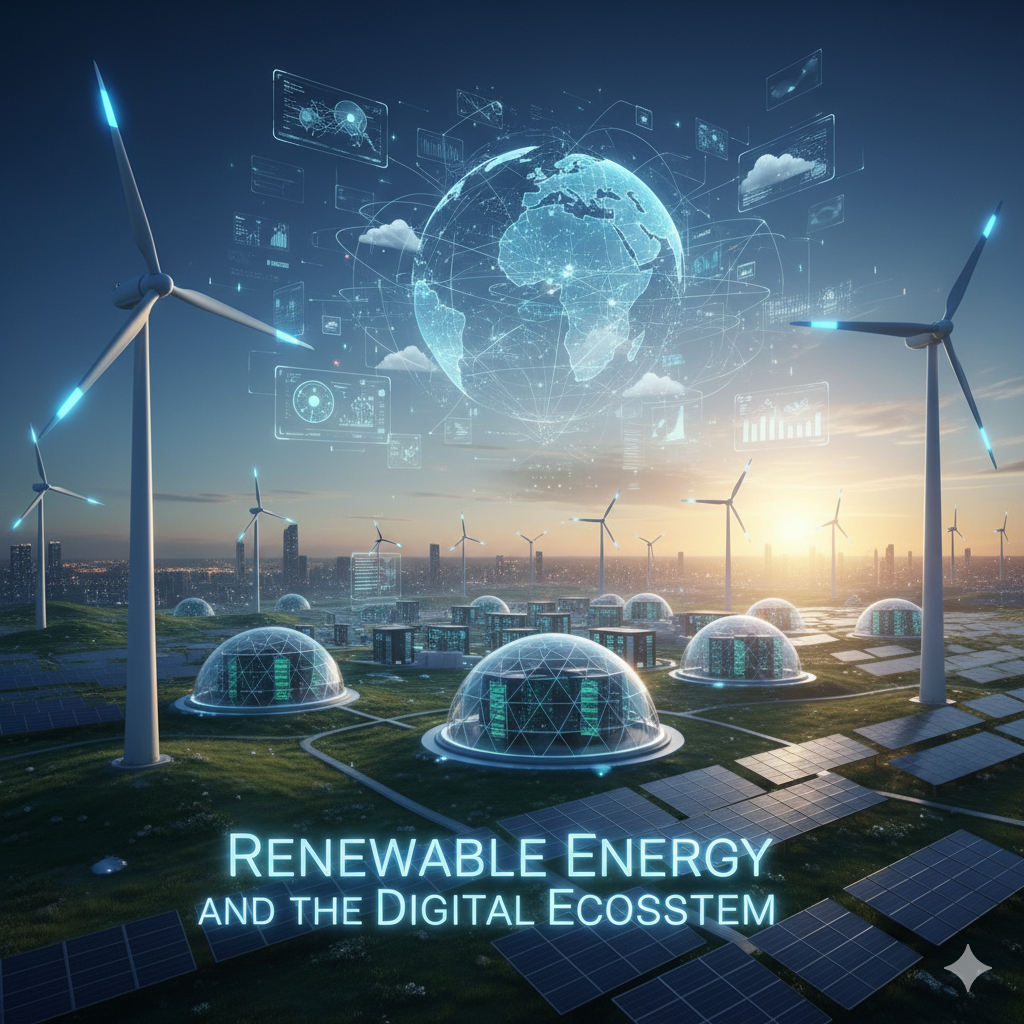
Emerging technologies are not only reshaping digital spaces but also the energy systems that power them. Clean energy innovations are crucial in supporting the high demands of data centers, AI systems, and digital services.
-
Solar and Wind Farms powering entire smart cities.
-
Smart Grids managing energy flow efficiently.
-
Hydrogen Fuel for industries and transport.
This intersection of digital and green revolutions could pave the way for sustainable growth.
Opportunities Ahead
The next digital revolution opens doors to countless opportunities:
-
Global Inclusion: Digital banking and education for remote areas.
-
Healthcare Access: Telemedicine and AI diagnostics for underserved populations.
-
Business Efficiency: Automation and blockchain cutting operational costs.
-
Sustainability: Smart systems reducing waste and energy consumption.
Challenges to Overcome
But with great power comes great responsibility. Emerging technologies pose significant challenges:
-
Privacy & Security: Cyber threats and misuse of personal data.
-
Ethical Dilemmas: AI bias, genetic editing, and misuse of tech.
-
Job Displacement: Automation replacing traditional roles.
-
Regulation: Governments struggling to keep pace with innovation.
Addressing these challenges will determine whether the next digital revolution benefits humanity or deepens divides.
Conclusion
The next digital Technology revolution is not a distant dream—it is already unfolding around us. AI is guiding our choices, blockchain is reshaping trust, quantum computing is on the horizon, and biotechnology is redefining life itself. The challenge for humanity is not whether we can build these technologies, but how we choose to use them.
As individuals, businesses, and nations, we must prepare for rapid changes. Education, adaptability, ethical responsibility, and global cooperation will be the keys to ensuring that this revolution builds a better, fairer, and more sustainable future.
