

Digital marketing is evolving at lightning speed. The methods and tools that worked five years ago may not deliver the same results today. With new technologies, consumer behaviors, and market demands, businesses must stay ahead of trends to remain competitive.
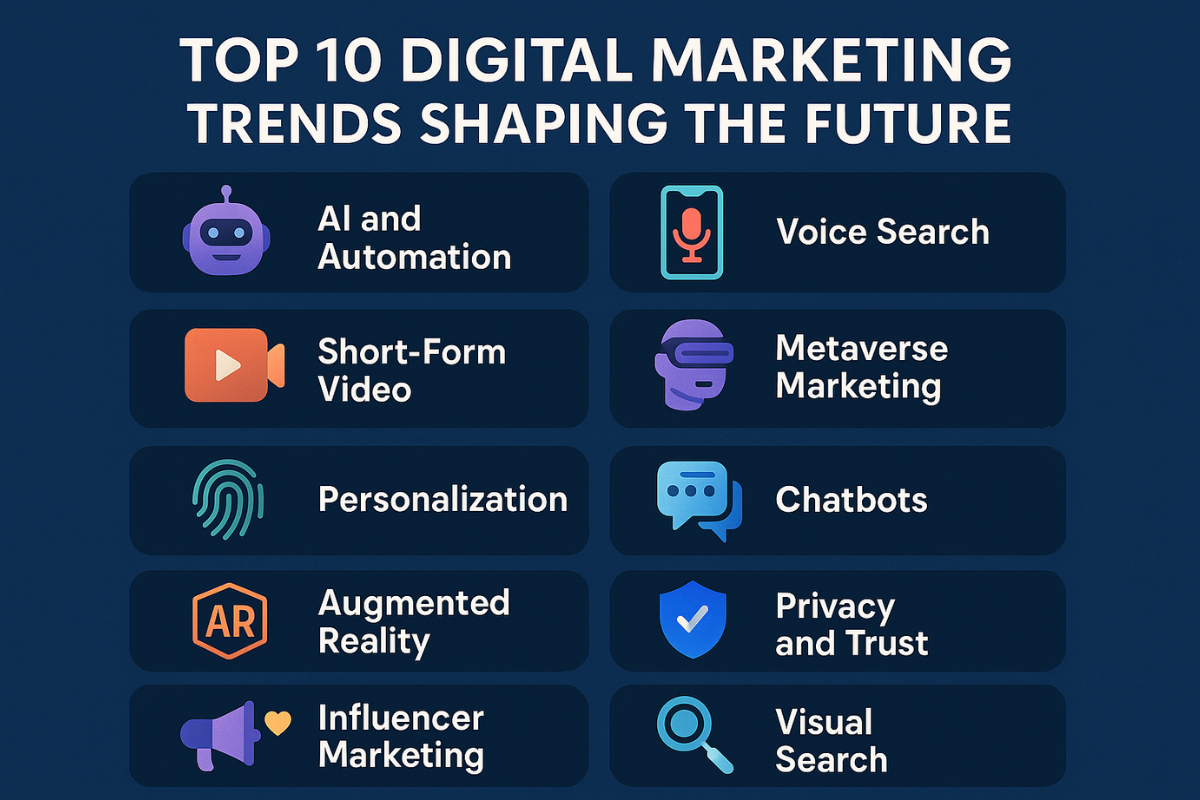
This blog explores the top 10 digital marketing trends shaping the future and explains how they can impact businesses worldwide. If you’re a marketer, entrepreneur, or business owner, understanding these trends will give you the edge to craft innovative campaigns and stay connected with your audience.
Top 10 Digital Marketing Trends in 2025 and Beyond
To give you a quick overview, here’s a basic information table of the leading trends and their significance:
| Trend | Description | Why It Matters for the Future |
|---|---|---|
| 1. AI-Powered Marketing | Use of artificial intelligence for personalization, chatbots, predictive analytics, and campaign optimization. | Enhances customer experience, saves time, and boosts ROI. |
| 2. Voice Search Optimization | Optimizing content for smart assistants like Alexa, Siri, and Google Assistant. | More people are using voice for search, influencing SEO strategies. |
| 3. Video & Short-Form Content | Growth of platforms like TikTok, Instagram Reels, and YouTube Shorts. | Grabs attention quickly and improves engagement rates. |
| 4. AR & VR Experiences | Augmented and Virtual Reality in product marketing, e-commerce, and events. | Creates immersive experiences and builds deeper brand connections. |
| 5. Influencer Marketing Evolution | Shift from mega-influencers to micro and nano-influencers. | More authentic engagement with niche audiences. |
| 6. Sustainability & Ethical Marketing | Brands focusing on eco-friendly and socially responsible campaigns. | Consumers prefer businesses that align with their values. |
| 7. Conversational Marketing | Real-time engagement through chatbots, messaging apps, and live chats. | Builds trust and improves conversion rates. |
| 8. Privacy & Data Protection | Stricter laws like GDPR and CCPA influencing data collection practices. | Transparency builds customer trust and loyalty. |
| 9. Omnichannel Marketing | Seamless integration across online and offline touchpoints. | Ensures consistent customer experiences. |
| 10. Social Commerce | Shopping directly via social media platforms. | Reduces friction in the buying journey and boosts sales. |
Detailed Breakdown of Each Trend
1. AI-Powered Marketing
Artificial Intelligence (AI) has become the backbone of digital marketing. From chatbots answering queries in real-time to predictive analytics that forecast customer behavior, AI transforms how brands interact with audiences.
-
Examples: Netflix’s recommendation engine, Amazon’s personalized product suggestions, and AI-driven ad targeting.
-
Future Impact: Businesses will adopt AI tools like ChatGPT for content generation, AI-powered CRMs, and machine learning models for customer segmentation.
2. Voice Search Optimization
Voice search is no longer futuristic—it’s mainstream. With smart speakers in homes and voice assistants in every smartphone, optimizing content for voice queries is vital.
-
Examples: Restaurants being found via “near me” searches or brands optimizing for long-tail conversational keywords.
-
Future Impact: Voice SEO will focus on natural language, question-based queries, and mobile-first indexing.
3. Video & Short-Form Content
Video continues to dominate, but short-form video is the hottest format. Audiences prefer quick, entertaining, and informative clips.
-
Examples: TikTok challenges, Instagram Reels tutorials, YouTube Shorts product showcases.
-
Future Impact: Brands will focus on storytelling in under 60 seconds, using interactive features like polls, stickers, and live streams.
4. AR & VR Experiences
Augmented Reality (AR) and Virtual Reality (VR) are transforming customer experiences.
-
Examples: IKEA’s AR app to visualize furniture in your room, VR tours in real estate.
-
Future Impact: More businesses will invest in AR filters, VR shopping malls, and immersive product experiences.
5. Influencer Marketing Evolution
Influencer marketing is shifting toward authenticity and niche engagement.
-
Examples: Micro-influencers with 10K–100K followers driving higher engagement than celebrities.
-
Future Impact: AI will help brands identify the right influencers, and partnerships will focus on long-term collaborations rather than one-off promotions.
6. Sustainability & Ethical Marketing
Modern consumers care about the planet and social responsibility.
-
Examples: Patagonia’s eco-friendly campaigns, Tesla’s sustainability-driven messaging.
-
Future Impact: Brands that adopt green practices and showcase transparency will gain customer loyalty.
7. Conversational Marketing
Conversational marketing involves real-time, personalized engagement.
-
Examples: Chatbots on e-commerce sites, WhatsApp marketing campaigns, and AI-driven customer service.
-
Future Impact: Messaging apps will become major sales channels, and hyper-personalized recommendations will increase conversions.
8. Privacy & Data Protection
With growing concerns about data misuse, privacy is now a core marketing element.
-
Examples: Apple’s iOS privacy updates, cookie-less digital advertising.
-
Future Impact: Businesses will invest in first-party data collection, transparent policies, and secure customer interactions.
9. Omnichannel Marketing
Omnichannel strategies ensure a seamless customer journey across platforms.
-
Examples: A customer browsing a product on Instagram, receiving an email reminder, and completing the purchase in-store.
-
Future Impact: Integration of physical and digital touchpoints, AI-driven personalization across all platforms, and unified customer data.
10. Social Commerce
Social media platforms are evolving into shopping hubs.
-
Examples: Instagram Shops, TikTok Shopping, Pinterest Buyable Pins.
-
Future Impact: Influencer-driven sales will rise, in-app checkouts will become smoother, and businesses will treat social platforms as primary sales channels.
How Businesses Can Adapt to These Trends
-
Invest in AI Tools: From chatbots to marketing automation, AI adoption is no longer optional.
-
Prioritize SEO for Voice: Use conversational keywords and focus on local search optimization.
-
Create Short, Engaging Videos: Repurpose content into reels, stories, and shorts.
-
Experiment with AR/VR: Even small businesses can use AR filters or VR product demos.
-
Build Long-Term Influencer Partnerships: Choose influencers whose values align with your brand.
-
Adopt Sustainability Practices: Highlight eco-friendly products and ethical practices.
-
Enhance Customer Conversations: Use WhatsApp, Messenger, or chatbots for instant replies.
-
Be Transparent with Data: Build trust through clear data policies.
-
Offer Omnichannel Experiences: Connect online, offline, and mobile seamlessly.
-
Leverage Social Commerce: Turn your social platforms into shopping destinations.
Conclusion
The future of digital marketing is about personalization, trust, and innovation. Businesses that embrace AI, prioritize ethical practices, and deliver seamless experiences will lead the way.
By understanding these top 10 digital marketing trends, you’ll not only prepare for the future but also gain a competitive advantage today.
